Overview
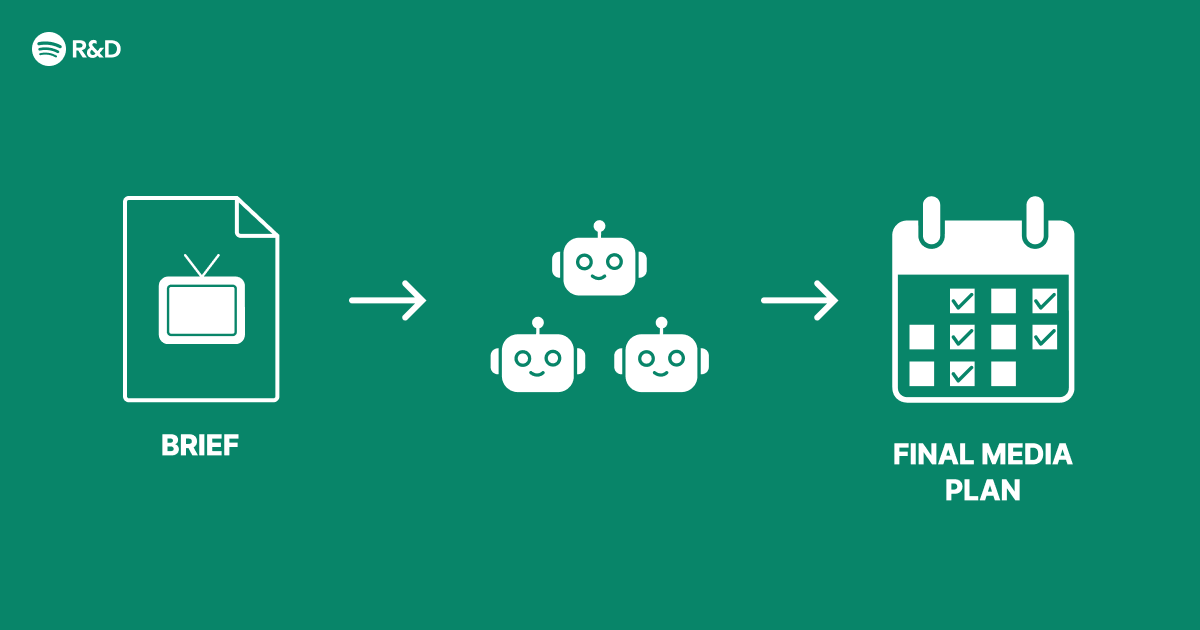
Advertising platforms today face a fundamental challenge: balancing user relevance, advertiser goals, and platform efficiency. Traditional monolithic models often struggle to adapt to dynamic contexts—like shifting user interests, budget constraints, and competitive auctions. In this guide, we walk you through the architecture and implementation of a multi‑agent system designed to tackle these complexities. Each agent specialises in a distinct function—targeting, creative generation, bid optimisation, and monitoring—and they collaborate asynchronously to produce smarter ad placements. Based on a production‑proven design, this tutorial will help you understand the core principles, set up your own multi‑agent pipeline, and avoid common pitfalls.
Prerequisites
Before diving in, ensure you have:
- Basic knowledge of Python (3.8+) and microservices concepts
- Familiarity with message queues (e.g., RabbitMQ, Kafka) and REST APIs
- Access to a machine learning framework (e.g., PyTorch, TensorFlow) for building models
- A testing/development environment with Docker for containerisation
- Understanding of online advertising metrics: CTR, CPC, CPA, ROAS
Step‑by‑Step Implementation
1. Define Agent Roles and Communication Contracts
Every multi‑agent system begins with clear agent boundaries. In our architecture, we define four core agents:
- Targeting Agent: Analyzes user profiles and contextual signals to produce a set of candidate ad categories.
- Creative Agent: Generates ad copy and visual templates based on the selected category and brand guidelines.
- Bid Optimiser Agent: Estimates the optimal bid price using historical auction data and real‑time budget constraints.
- Monitoring Agent: Kicks off re‑evaluation loops when performance degrades (e.g., CTR drop > 10%).
Define a shared schema for messages passed between agents. Example using JSON:
{
  "agent_id": "targeting",
  "payload": {
    "user_id": "usr_123",
    "context": {"time": 1620000000, "device": "mobile"},
    "candidates": ["sports", "electronics"]
  },
  "timestamp": 1620000000
}
2. Set Up Asynchronous Message Bus
Agents communicate asynchronously to avoid blocking. Use a message queue (e.g., RabbitMQ) with topic exchanges. Each agent subscribes to its input topic and publishes results to a downstream topic. For development, you can simulate with Python’s asyncio and an in‑memory queue. Example producer:
import asyncio

class MessageBus:
    def __init__(self):
        self.subscribers = {}

    def subscribe(self, topic, callback):
        self.subscribers.setdefault(topic, []).append(callback)

    async def publish(self, topic, message):
        for cb in self.subscribers.get(topic, []):
            await cb(message)
3. Implement the Targeting Agent
The Targeting Agent uses a lightweight collaborative filtering model. Load pre‑trained embeddings for users and ads, then compute cosine similarity to retrieve top‑N categories. Deploy as a stateless microservice with a REST endpoint or consume directly from the queue. Example logic:
def target(user_vector, ad_vectors, top_n=5):
    scores = {cat: dot(user_vector, ad_vec) for cat, ad_vec in ad_vectors.items()}
    return sorted(scores, key=scores.get, reverse=True)[:top_n]
4. Build the Creative Agent
This agent generates ad variations using a template‑based approach or a fine‑tuned language model. For speed, we recommend a rule‑based system that fills slots (headline, description, CTA) from a database of approved phrases. The agent also ensures brand consistency. Example:
class CreativeAgent:
    def generate(self, category):
        headline_templates = {
            "electronics": ["Get the latest gadgets at 20% off!", ...]
        }
        return random.choice(headline_templates[category])
5. Implement the Bid Optimiser Agent
Use a reinforcement learning approach (e.g., Q‑learning) to adjust bids per impression based on predicted conversion probability and remaining budget. The agent receives a state tuple (budget_remaining, time_left, user_score) and outputs a bid amount. For simplicity, you can start with a linear formula:

def optimal_bid(base_bid, conversion_prob, budget_ratio):
    return base_bid * (0.5 + 0.5 * conversion_prob) * budget_ratio
6. Add the Monitoring Agent
The Monitoring Agent periodically pulls real‑time metrics (e.g., from a Prometheus endpoint) and triggers a re‑run of the pipeline if performance thresholds are breached. It can also send alerts to an operations dashboard.
7. Orchestrate the Pipeline
Use a workflow orchestrator like Apache Airflow or a simple custom scheduler. The pipeline executes in stages:
- Targeting Agent selects candidate categories.
- Creative Agent generates ads for each category.
- Bid Optimiser sets bids for each ad‑user pair.
- Ads are sent to the auction system (external).
A typical DAG definition in Airflow:
from airflow import DAG
from airflow.operators.python_operator import PythonOperator

def targeting():
    # ... call targeting agent
    pass

def creative():
    # ... call creative agent
    pass

dag = DAG('ad_pipeline', ...)
t1 = PythonOperator(task_id='targeting', python_callable=targeting, dag=dag)
t2 = PythonOperator(task_id='creative', python_callable=creative, dag=dag)
t1 >> t2
Common Mistakes
- Over‑coupling agents: Let agents communicate via messages only; never share databases or model files directly.
- Ignoring latency: Creative generation can be slow. Use caching or fallback templates to meet ad‑server timeouts (often < 100 ms).
- Not handling failures: If the Bid Optimiser fails, the pipeline should fall back to a default bid logic, not crash entirely.
- Assuming stationarity: User behaviour changes; retrain the Targeting and Bid Optimiser models periodically (e.g., every 24 hours).
- Skipping A/B testing: Always compare the multi‑agent system against a baseline to isolate its impact.
Summary
This tutorial presented a modular, scalable multi‑agent architecture for advertising that separates concerns into specialised agents. By using asynchronous messaging, simple models, and careful orchestration, you can build a system that adapts to real‑time data and delivers smarter ad placements. The same design patterns apply to recommendation systems, content curation, and other domains requiring collaborative decision‑making.